Introduction: The Technology Behind the Digital Revolution
What if information could be stored securely, transactions could be verified without depending on a single organization, and people around the world could share digital records with greater transparency? This is the idea behind blockchain technology.
Blockchain is one of the most important technological developments of the digital age. Although it became widely recognized through Bitcoin and other cryptocurrencies, its applications extend far beyond digital money.
Today, businesses, financial institutions, technology companies, and governments are exploring blockchain to improve the way information is recorded, verified, and shared.
From international payments to supply chain management, blockchain has the potential to transform traditional processes and introduce new possibilities for digital innovation.
But what exactly is blockchain? How does it work? Why is it considered revolutionary? And what role could it play in the future?
Let’s explore this powerful technology.
1. What Is Blockchain Technology?
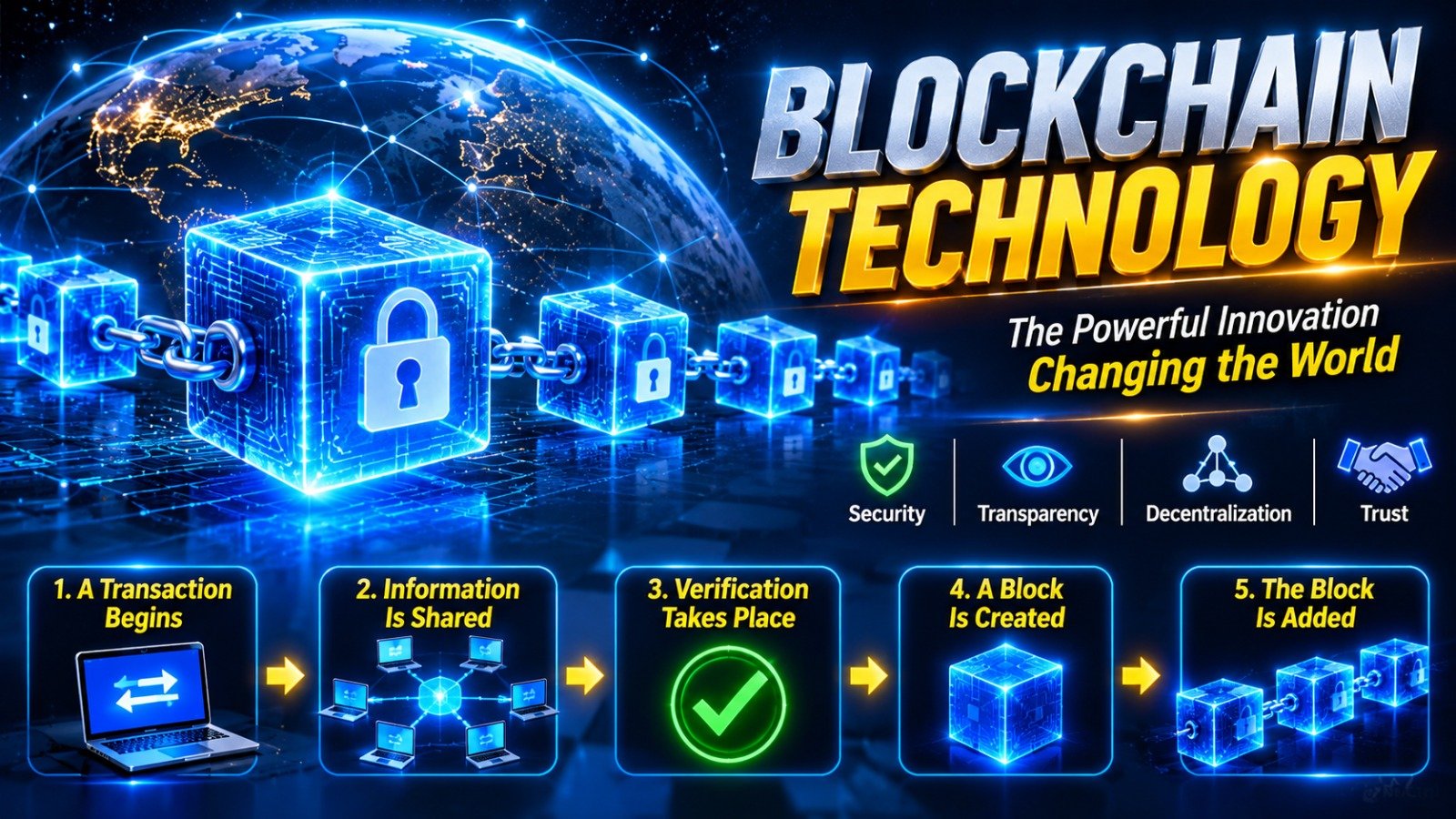
Blockchain is a type of digital ledger technology that records information in connected groups called blocks.
These blocks are linked together using cryptographic techniques, creating a chain of records.
Unlike a traditional database controlled by one organization, a decentralized blockchain can maintain copies of its records across multiple computers in a network.
Each participant follows the network’s rules to verify information and maintain consistency.
One of the most interesting characteristics of blockchain is that properly confirmed records are designed to be extremely difficult to change without detection.
This makes blockchain useful for applications that require transparency, security, and reliable record-keeping.
2. How Does Blockchain Work?
Blockchain may sound complicated, but its basic process can be understood through a simple example.
Imagine that two people want to transfer digital assets to each other.
Here is what happens:
Step 1: A Transaction Begins
A user initiates a transaction through a compatible digital application or wallet.
Step 2: Information Is Shared
The transaction is broadcast to the blockchain network.
Step 3: Verification Takes Place
Network participants check the transaction according to the rules of the blockchain.
Step 4: A Block Is Created
Valid transactions are grouped together into a block.
Step 5: The Block Is Added
The network uses its consensus mechanism to agree on the validity of the new block.
Step 6: The Record Becomes Part of the Chain
The confirmed block is linked to previous blocks, becoming part of the blockchain’s transaction history.
This process allows blockchain networks to maintain shared